In 2026, on-demand app development costs between $25k to $300k+, depending on several technical and business requirements. Many businesses launch a basic MVP built to validate a startup idea, which costs between $25k and $50k, while a fully customized on-demand platform with advanced features, AI capabilities, real-time tracking, payment integrations, and multiple user panels can exceed $200k.
Curious to know what the On-Demand App Development Cost includes? This post covers all the information about on-demand app development costs.
What is On-Demand App Development?
On-demand app development is the process of creating a digital ecosystem that connects customers, service providers, and business owners in real time. Unlike traditional applications that focus on a single user interface, on-demand apps operate through multiple interconnected applications that work together to deliver a service instantly.
Most on-demand businesses start with three core applications:
Customer App
Used by customers to:
- Request services
- Track orders or rides
- Make payments
- Receive notifications
Service Provider App
Used by drivers, delivery partners, merchants, or professionals to:
- Accept requests
- Manage availability
- Track customer locations
- View earnings
Admin Panel
Used by business owners to:
- Manage users and providers
- Monitor transactions
- Track performance
- Control operations
Modern On-Demand Platforms Are Much Larger
Most startups often begin with 3 core apps:
- client app
- service provider app
- admin panel
But as a business expands, new systems and dashboards can typically be implemented to better oversee operations. Startups can later invest in-
- Merchant portals
- Customer support panels
- Analytics systems
- Marketing dashboards
- Payment management systems
- Partner management tools
- Internal operations platforms
One such example is an on-demand taxi app like Uber that started with a simple 3 app-based ecosystem but gradually expanded by adding more apps to its ecosystem.
Common Examples of On-Demand Apps
- Ride-Hailing Apps: Uber, Ola
- Food Delivery Apps: Swiggy, Zomato
- Grocery Delivery Apps: Instacart, Blinkit
- Home Service Apps: Urban Company
- Healthcare Apps: Practo
This ecosystem-based architecture is what makes on-demand applications different from traditional mobile apps and is one of the main reasons why on-demand app development costs are generally higher.
What is On-Demand App Development Cost In 2026?
Depending on the app type and features, on-demand app development costs $25k–$300k+ in 2026. Explore this On-Demand App Development Cost estimation based on different app types:
| App Type | Estimated Cost |
| MVP On-Demand App | $25k – $50k |
| Clone App | $40k – $80k |
| Custom On-Demand App | $80k – $200k |
| Enterprise On-Demand Platform | $200k – $300k + |
How On-Demand App Development Cost is Structured in 2026
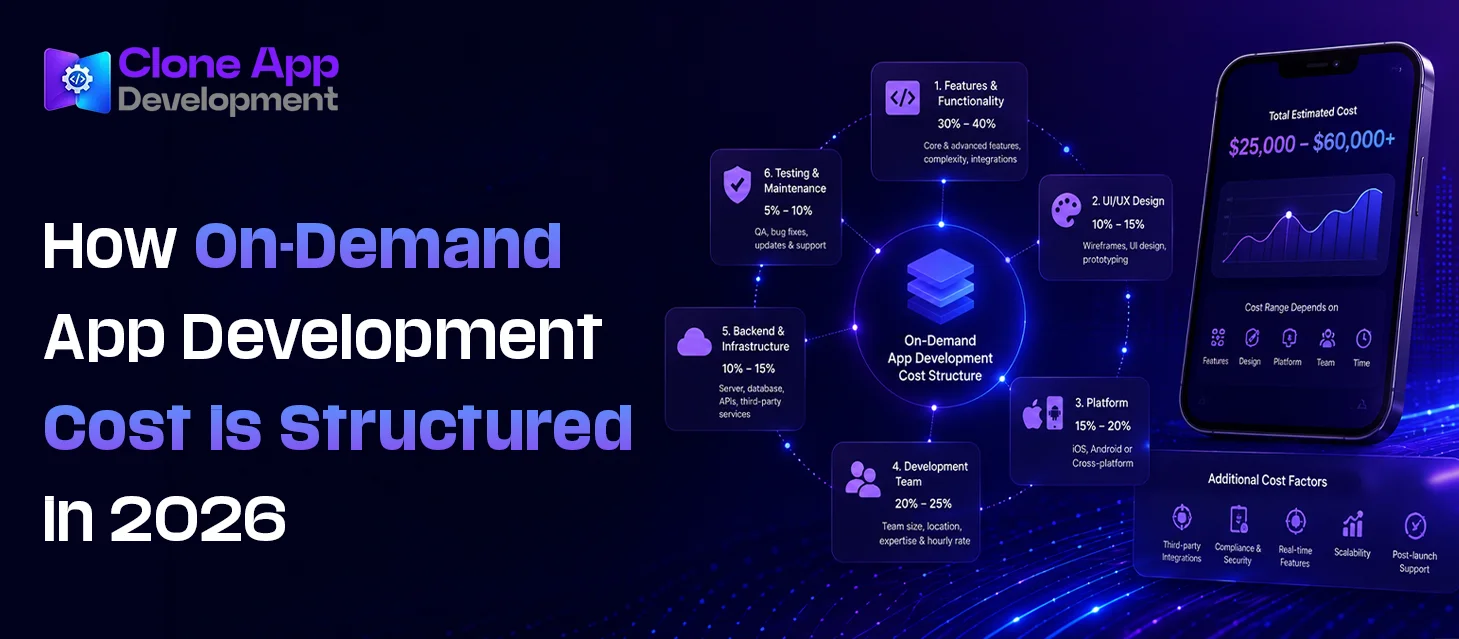
Startups often think they just pay for app development. The capital is divided into different components. Explore below to understand where your investment goes, which helps you budget.
| Development Stage | Estimated Cost Range |
| Discovery & Planning | $2k – $10k |
| UI/UX Design | $3k – $20k |
| Frontend Development | $8k – $60k |
| Backend Development | $10k – $80k |
| Third-Party Integrations | $2k – $20k |
| Testing & Quality Assurance | $3k – $15k |
| Deployment & Launch | $1k – $5k |
| Maintenance & Updates (Annual) | 15% – 25% of the total project cost |
| |
Discovery and Planning
This is where the project starts. The team defines requirements, user flows, features, and the development roadmap.
- Business analysis
- Feature planning
- Market research
- Technical planning
- Project scope definition
UI/UX Design
Design creates the look and user experience of the platform. A well-designed app improves usability and customer retention.
- Wireframes
- User journeys
- Mobile app design
- Provider app design
- Admin dashboard design
Frontend Development
Frontend development builds the screens and features users interact with.
- Customer app development
- Service provider app development
- Responsive interfaces
- Real-time updates
- Mobile app functionality
Backend Development
Backend development usually takes one of the largest portions of the budget because it powers the entire platform.
- User management
- Booking system
- Databases
- APIs
- Business logic
Third-Party Integrations
Most on-demand apps rely on external services to deliver key functionality.
- Payment gateways
- Google Maps
- SMS services
- Push notifications
- Analytics tools
Testing and Quality Assurance
Before launch, the app must be tested across devices and operating systems.
- Bug testing
- Performance testing
- Security testing
- Device compatibility checks
- User experience testing
Deployment and Launch
Once testing is complete, the app is prepared for launch.
- App Store submission
- Google Play submission
- Server setup
- Production deployment
- Launch support
Maintenance and Updates
Development costs do not end after launch. Ongoing maintenance keeps the app secure, stable, and up to date.
- Bug fixes
- Feature updates
- Security patches
- Server maintenance
- Performance improvements
Which areas need a high investment?
In most on-demand app developments, capital goes mostly to:
- Backend development: It facilitates bookings, payments, tracking, and company activities.
- Frontend Development: Creates customer and supplier apps.
- UI/UX Design: Facilitates user interaction.
- Third-party services: Maps, payments, alerts, etc.
Startups’ on-demand app development budgets are frequently dominated by backend and frontend development, which comprise the platform’s core.
Factors Influencing the On-Demand App Development Cost in 2026
Here are some key factors influencing On-Demand app development costs in 2026:
App Type
The type of app you build has a direct impact on the overall cost.
- MVP apps cost less because they include only essential features.
- Clone apps require moderate customization and investment.
- Custom apps need unique designs and workflows.
- Enterprise platforms require advanced functionality and scalability.
- More complex projects generally require larger budgets.
Number of User Panels
Most on-demand apps operate through multiple panels.
- Customer app
- Service provider app
- Admin dashboard
- Merchant panel (if required)
- Support or operations dashboard
More panels mean more development work and higher costs.
Features and Functionality
Features are one of the biggest cost drivers.
- Real-time tracking
- Online payments
- Push notifications
- Ratings and reviews
- AI-powered recommendations
The more features you add, the more development time is required.
Platform Choice
The platforms you support also affect the budget.
- Android only costs less.
- iOS only costs less.
- Android and iOS together require more investment.
- Web platforms increase development costs further.
- Multiple platforms require additional testing and maintenance.
Third-Party Integrations
Many on-demand apps depend on external services.
- Google Maps
- Payment gateways
- SMS services
- Analytics tools
- Cloud services
Each integration adds development and maintenance costs.
UI/UX Design Requirements
A simple design costs less than a fully customized experience.
- Basic interfaces require less effort.
- Custom branding increases costs.
- Advanced animations require more work.
- Unique user experiences take longer to design.
- Better design often improves user engagement.
Technology Stack
The technologies used to build the app influence pricing.
- Modern frameworks may speed up development.
- Advanced technologies require specialized developers.
- AI features increase development effort.
- Custom backend systems require larger investments.
- Enterprise-grade infrastructure costs more.
Development Team Location
Development rates vary across regions.
- North American agencies usually charge more.
- European agencies often have mid-range pricing.
- Offshore teams can reduce development costs.
- Agency expertise affects pricing.
- Experienced teams generally charge higher rates.
Scalability Requirements
Apps built for future growth require additional planning.
- Support for more users
- Better server infrastructure
- Higher security standards
- Advanced databases
- Performance optimization
Building for scale usually increases the initial investment.
Post-Launch Maintenance
The app needs ongoing support after launch.
- Bug fixes
- Security updates
- Feature enhancements
- Performance monitoring
- Server maintenance
Most businesses allocate a separate budget for maintenance and updates after the app goes live.
Conclusion
Want to launch an on-demand app but wondering about the cost estimation? Team up with Clone App Development now!
We design on-demand applications as per the startup’s goals, budget, and industry norms. Our team turns your concept into a product through development and launch.