Travel app development cost typically ranges from $15k to $250k+, depending on the type of app you build. A basic MVP, clone app, or low-investment travel app with simple login, hotel or flight search, booking requests, user profiles, saved favorites, push notifications, and 2–3 monetization options usually ranges between $5k and $80k. An advanced travel app with AI-based recommendations, real-time booking, payment gateways, map integration, multilingual support, loyalty programs, third-party APIs, and a strong monetization model typically requires a budget of $80k+ and can exceed $250k.
Planning to launch a travel app but unsure about the investment required, the essential features to include, or the best ways to monetize it? This guide provides a comprehensive overview of everything you need to know in 2026—from the business benefits and must-have features to development costs and proven revenue models—helping you make informed decisions and build a successful travel app.
Business Benefits Of Travel App Development
Businesses can directly engage passengers, decrease third-party platform reliance, and generate new income with travel app development. A strategically built travel app ensures growth, customer retention, and brand extension beyond reservations. Wondering how? Explore these key business benefits to build a travel app:
Reduced Third-Party Platform Reliability
Travel apps enable niche-based businesses to directly connect with customers rather than relying on OTAs and third-party marketplaces. This improves customer interactions and eliminates commission costs from third-party booking platforms.
Multiple Revenue Sources
Travel apps let companies optimize profits via booking commissions, premium memberships, ads, affiliate partnerships, and highlighted listings.
Better Customer Retention
Push alerts, loyalty programs, and targeted offers boost repeat bookings and client retention.
Better brand visibility
A well-built travel app puts your brand in front of clients during their trip, building trust and awareness.
Better customer insights and data
Travel apps provide consumer preferences, booking habits, and activity. These insights help companies enhance services and sell intelligently.
Future Growth Scalability
Travel apps enable expansion into new areas and the addition of tour packages, vehicle rentals, travel insurance, and AI-powered trip planning.
Competitive Edge
In 2026, a feature-rich travel app helps companies compete and exceed consumer expectations as digital travel becomes the standard.
Must-Have Features for Travel App Development
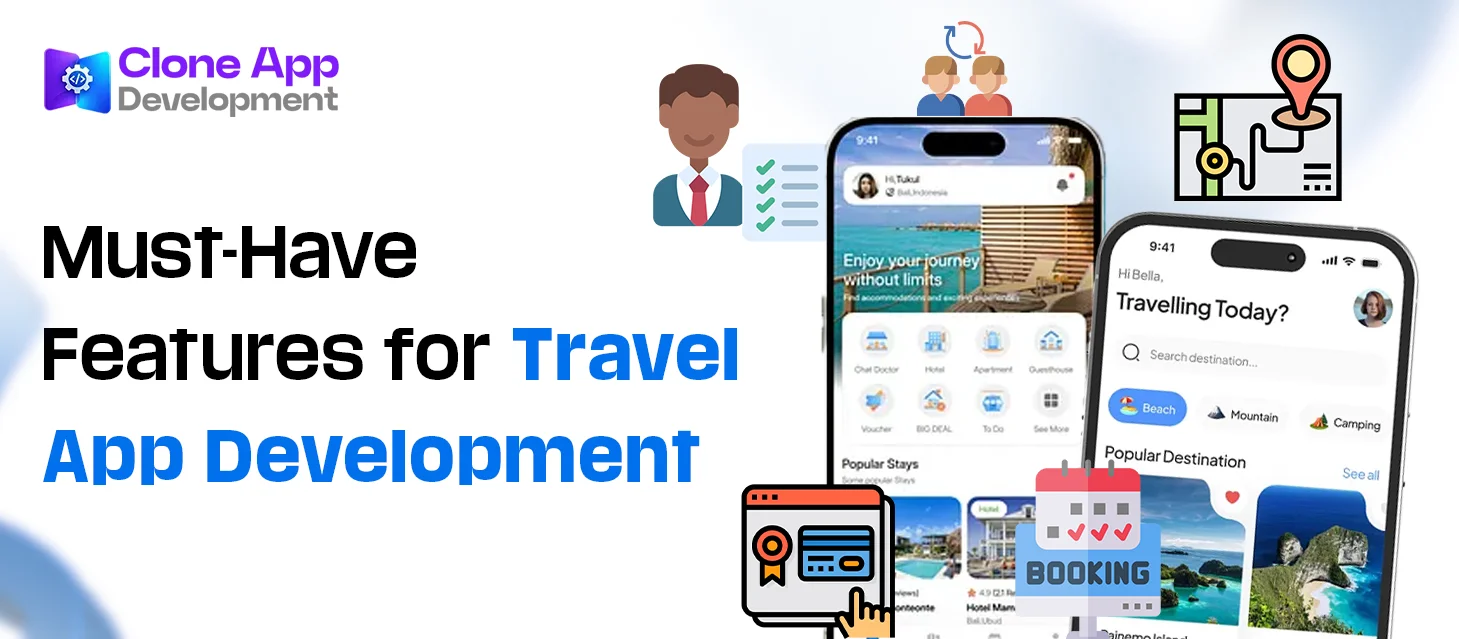
Must-have features for travel app development usually include user registration, search and booking, secure payments, maps, notifications, reviews, and personalized recommendations. The right feature set depends on what type of app you’re building-
MVP apps usually cover the basics, clone apps add more convenience and automation, and custom apps include advanced AI, integrations, and personalization.
User Management Features
MVP Travel App
- User registration and login
- User profile
- Saved favorites
Clone Travel App
- Social media login
- Booking history
- Wishlist management
Custom Travel App
- Personalized profiles
- Loyalty accounts
- Multi-device synchronization
Search and Discovery Features
MVP Travel App
- Destination search
- Basic filters
Clone Travel App
- Advanced search filters
- Category browsing
- Sorting options
Custom Travel App
- AI-powered recommendations
- Personalized search results
- Voice search capabilities
Booking and Reservation Features
MVP Travel App
- Hotel booking requests
- Flight listings
Clone Travel App
- Real-time hotel booking
- Flight reservations
- Booking confirmations
Custom Travel App
- Dynamic packages
- Tour and activity bookings
- Smart itinerary management
Payment Features
MVP Travel App
- Basic payment gateway
- Secure checkout
Clone Travel App
- Multiple payment options
- Refund management
Custom Travel App
- Multi-currency payments
- Wallet integration
- Buy-now-pay-later support
Maps and Navigation Features
MVP Travel App
Clone Travel App
- GPS navigation
- Nearby attractions
Custom Travel App
- Route optimization
- Real-time location tracking
- Offline maps
Communication and Engagement Features
MVP Travel App
- Push notifications
- Email alerts
Clone Travel App
- In-app support
- Booking reminders
Custom Travel App
- AI chatbot
- Personalized offers
- Loyalty rewards and promotions
Reviews and Ratings Features
MVP Travel App
Clone Travel App
Custom Travel App
- Verified reviews
- Community recommendations
Admin Features
MVP Travel App
- User management
- Booking management
Clone Travel App
- Content management
- Offers and discounts management
Custom Travel App
- Analytics dashboard
- Customer behavior tracking
- Revenue reports
Third-Party Integrations
MVP Travel App
- Payment gateway integration
Clone Travel App
- Google Maps
- Hotel and flight APIs
Custom Travel App
- CRM integrations
- Travel insurance APIs
- Car rental APIs
- AI recommendation engines
Travel App Development Cost: In-Depth Breakdown for Startups

For most startups, travel app development costs typically range from $15k to $250k+, depending on the app’s complexity, feature set, and development approach. Startups can begin with a lean MVP to validate their idea or invest in advanced AI-powered platforms with premium experiences.
Here’s a simple cost breakdown by app type:
| App Type | Typical Features | Estimated Development Cost |
| MVP Travel App | Login
Profiles
Search
Booking requests
Notifications | $15k – $40k |
| Clone Travel App | Real-time booking
Payments
Maps
Reviews
Filter | $40k – $90k |
| Custom Travel App | AI recommendations
loyalty programs
multilingual support
APIs | $90k – $250k+ |
| Enterprise OTA Platform | Multi-vendor support
Analytics
Global scaling | $250k+ |
Factors Influencing Travel App Development Cost
Feature Complexity
Your app needs more resources as it advances. AI itinerary planning, loyalty schemes, real-time monitoring, and tailored suggestions raise development expenses.
App Type and Scope
Clone apps and bespoke platforms demand more connectors, processes, and backend complexity than MVPs. Naturally, bigger projects cost more.
Platform Choice
Building cross-platform apps using Flutter or React Native costs less than developing native Android and iOS apps. Many firms prefer cross-platform development to save expenses and launch faster.
UI/UX Design Requirements
Design and development costs are higher for more interactive designs, bespoke animations, and premium user experiences than for simple interfaces.
Third-Party Integrations
Travel apps depend on Google Maps, hotel APIs, airline booking APIs, payment gateways, and CRM systems. Integrations increase development and licensing expenses.
Development Team Location and Expertise
North American and Western European developers pay far more than experienced Indian or Eastern European teams. Pricing also depends on team and project experience.
Maintenance and Upgrades
App development is only the start. Budgets should also cover maintenance, bug patches, server charges, product improvements, and API subscriptions.
Technology Stack
The technologies, frameworks, cloud infrastructure, and databases used impact development costs and scalability. Modern technology can cost more initially, but it minimizes maintenance costs thereafter.
What Are the Best Monetization Strategies for Travel Apps?
Businesses can optimize profits and develop a sustainable travel platform by integrating these monetization strategies:
Commission-based bookings
This is the most typical travel platform monetization approach. When users book hotels, flights, trips, or cars using the app, businesses get a share. Marketplace and OTA platforms suit this strategy.
Subscription Plans
Provide premium memberships through Subscription Plans in travel apps that provide special bargains, AI itinerary planning, offline access, and tailored suggestions to target users. This not only grows profitability in an app but also improves customer retention and recurring income.
In-App Ads
Banner advertisements, native ads, and promotions from hotel, airline, and travel brands are a great revenue source for apps with large user bases.
Affiliate Marketing
Travel apps can earn referral commissions by partnering with airlines, hotels, insurance companies, and tour operators. Every time users book services through affiliate links, businesses generate additional revenue without increasing operational costs.
Featured Listings and Sponsored Placements
Many travel apps make profits by enabling premium visibility on the top search results of the app for hotels, restaurants, and tour operators. This strategy creates an extra revenue stream while helping partners attract more customers.
Freemium Model
Businesses can provide basic tools for free and charge for enhanced trip planning, offline maps, and specialized travel help. User attraction and upselling are achieved using this method.
In-App Purchases
Businesses can offer in-app purchases, such as destination guides, itinerary packs, premium maps, and other travel tools.
White-label and SaaS licensing
Businesses can license their travel platform to agencies and tour operators and create an additional B2B revenue stream. This model helps maximize platform value and increase ROI.
Hybrid Revenue Model
Most successful travel apps use multiple revenue streams, such as- commissions, subscriptions, advertising, and affiliate agreements, altogether. A hybrid strategy diversifies revenue and boosts long-term profitability.
Conclusion
Want to build a travel app but wondering how to balance features, prices, and profitability?
Clone App Development helps startups and enterprises transform their travel app ideas into high-performance digital platforms. From MVP development and clone app solutions to custom AI-powered travel applications, we build secure, scalable, and revenue-focused apps tailored to your unique business goals.