Instant messaging has become an important part of how people communicate, collaborate, and interact with businesses. Platforms like WhatsApp have created a strong market for messaging apps by combining chat, voice and video calls, media sharing, and business communication in one platform.
For entrepreneurs, this creates an opportunity to build a WhatsApp-like app for a specific audience, industry, or business model. Instead of developing every feature from scratch, businesses can start with a proven messaging concept and customize the platform with own branding, features, monetization strategy, and user experience.
Build a WhatsApp-Like App With Clone App Development
Book Consultation
However, building a successful WhatsApp clone requires more than copying its interface. Businesses need to plan the target market, core features, security, real-time communication, technology, and revenue model before development begins.
In this guide, we’ll explore the WhatsApp business model, must-have features, and the step-by-step process to create a WhatsApp clone app built around your business goals.
About WhatsApp and Its Business Model
WhatsApp evolved from a chat app into a business and communication environment. It links users, companies, artists, and channels via chat, calls, status updates, and business tools. Entrepreneurs should learn that messaging apps may boost user engagement and corporate communication.
User Messaging
Voice, video, and material sharing are available in private and group conversations. This massive user network underpins the platform.
WhatsApp Business
WhatsApp helps businesses answer consumer queries, exchange product information, create leads, and assist sales. Meta offers expanded commercial solutions including AI-powered customer assistance and communications.
Business Messaging Revenue
Meta makes most of its money from WhatsApp’s business communications. In Q4 2025, paid WhatsApp messaging generated $2 billion, demonstrating the expanding economic value of business interactions.
Ads and Discoverability
Meta is also adding Status advertisements, sponsored channels, and channel subscriptions to WhatsApp’s Updates page. These enable companies and artists to reach new audiences without adverts in intimate discussions.
AI-Powered Business Tools
AI is being added to the business model. Meta’s Business AI can answer client queries, propose goods, qualify leads, arrange meetings, and assist sales via WhatsApp.
Must-Have Features for a WhatsApp Clone App
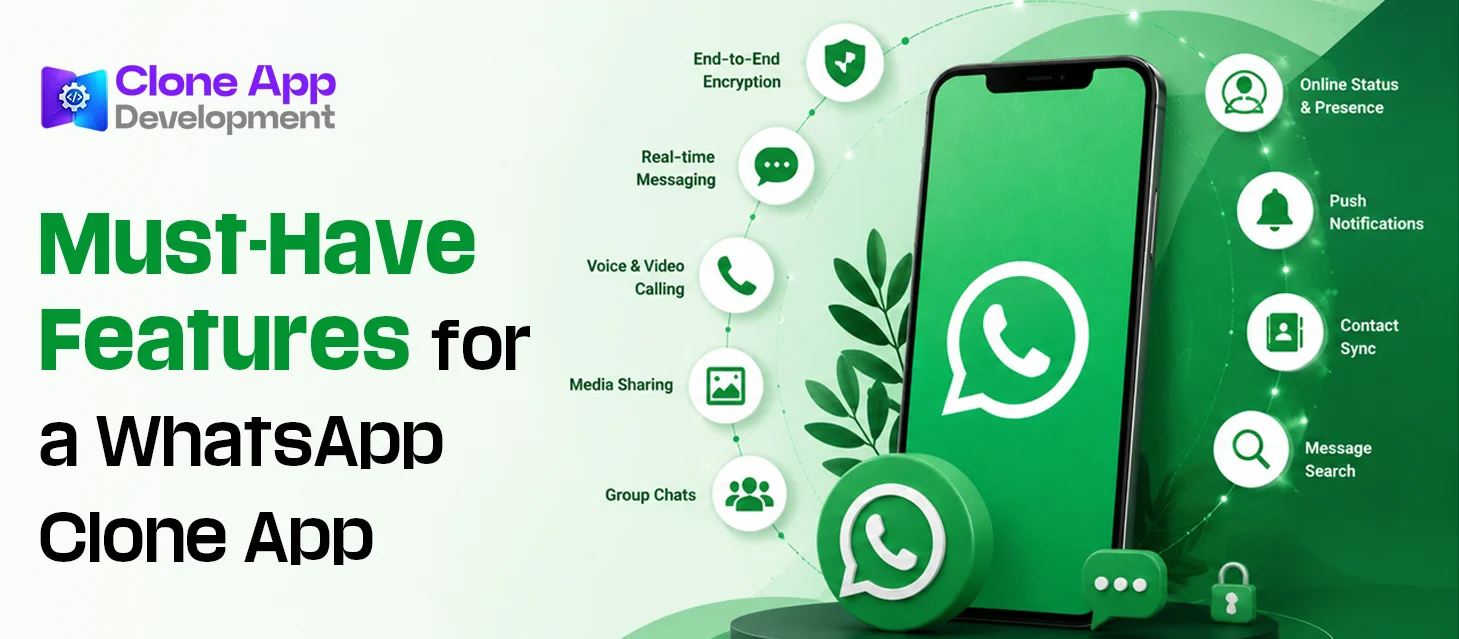
A successful WhatsApp clone should focus on the features users expect from a modern messaging platform while allowing businesses to customize the experience for their target market.
User & Profile Features
- Easy registration and login
- User profiles and profile photos
- Contact management
- Privacy settings
- Online and last-seen status
Messaging Features
- One-to-one chat
- Group messaging
- Voice messages
- Message reactions
- Message replies, forwarding, and deletion
- Read receipts and typing indicators
Media & Calling
- Photo and video sharing
- Document and file sharing
- Voice calls
- Video calls
- In-app camera and media tools
Engagement Features
- Status updates
- Channels or broadcast features
- Push notifications
- Search and chat history
Security Features
- End-to-end encryption
- Two-step verification
- User blocking and reporting
- Secure account authentication
- Privacy controls
Business Features
- Business profiles
- Product or service catalogs
- Automated customer responses
- Business messaging tools
- AI-powered customer support
- Payment or transaction integrations where supported
These essential features can be customized with industry-specific functionality, monetization choices, and branding to build a WhatsApp-like platform for their market.
Build a WhatsApp-Like App With Clone App Development
Book Consultation
Step-by-Step Process to Build a WhatsApp Clone App
Building a WhatsApp-like messaging platform goes beyond conversation. Before development, companies must consider their audience, communication model, security, technology, and monetization. A realistic development process:
Define Your Business Model
Start by deciding who your messaging platform will serve and what makes it different from existing apps.
Define:
- Target users and market
- Core communication services
- Free and paid features
- Business messaging opportunities
- Monetization strategy
Plan the Core Features
Select the features users actually need for the first version instead of trying to replicate every WhatsApp feature.
Start with:
- User registration
- One-to-one and group chat
- Media sharing
- Voice messages
- Voice and video calls
- Push notifications
- User profiles
- Privacy settings
Design the UI/UX
Create a simple interface that makes communication quick and easy. The chat experience should be intuitive across different devices and screen sizes.
Design:
- Login and registration screens
- Chat interface
- User profiles
- Group screens
- Calling interface
- Settings and privacy screens
Choose the Technology Stack
Select technologies that can support real-time communication, media sharing, calls, security, and future growth.
Your technology stack may include:
- Android and iOS technologies
- Backend framework
- Database
- Cloud infrastructure
- Real-time communication tools
- Push notification services
- APIs and third-party integrations
Develop Real-Time Messaging
Real-time communication is the core of a WhatsApp clone. Build the messaging infrastructure to deliver messages quickly and reliably.
Include:
- Instant messaging
- Message delivery status
- Read receipts
- Typing indicators
- Group messaging
- Message synchronization
Add Voice, Video & Media Features
Modern messaging apps need more than text chat. Add communication and media-sharing capabilities based on your target users.
Consider:
- Voice calls
- Video calls
- Voice notes
- Image and video sharing
- Document sharing
- In-app camera
Implement Security & Privacy
Security should be planned from the beginning. WhatsApp uses end-to-end encryption for personal messages and calls, along with additional privacy and account-security features.
Your platform may include:
- Secure authentication
- Data encryption
- Two-step verification
- Privacy controls
- Block and report options
- Secure media storage
Add Business & Monetization Features
If you want to build a commercial messaging platform, offer capabilities that provide corporate value beyond personal communication. WhatsApp expands corporate messaging with customer chats, commerce, and AI-powered help features.
Possible features include:
- Business profiles
- Product catalogs
- Customer support chat
- Paid messaging
- Subscriptions
- Advertising opportunities
- AI-powered business assistance
Test the Application
Test the complete platform before launch to ensure messages, calls, media, notifications, and security features work properly.
Test for:
- Messaging errors
- Call quality
- Media uploads
- Notification delivery
- Security vulnerabilities
- Device compatibility
- App performance
Launch, Monitor & Scale
Launch the first version with essential features and monitor how users interact with the platform. Use feedback and performance data to improve the app over time.
You can later add:
- AI chat assistants
- Channels and communities
- Business tools
- Payments
- Advanced analytics
- Multi-device support
- New monetization features
This step-by-step process helps businesses to launch and verify demand more quickly, and over time grow a broader communications ecosystem, rather than making huge investments in every function from day one.
Build a WhatsApp-Like App With Clone App Development
Book Consultation
Conclusion
Building a WhatsApp-like app can be a strong business opportunity when the platform is designed around a clear target market, useful communication features, and a sustainable revenue model. For this, you need the support of the right development partner!
Team up with Clone App Development! We tailor the platform to your company’s requirements for real-time messaging, voice/video conversations, media sharing, alerts, security, and admin control.
Clone app development helps businesses design, customize, develop, test, and launch WhatsApp-like apps tailored to market and growth goals, backed by years of app development experience.